Triveni Camp and River Rafting in Sikkim: A Complete Destination Guide
Triveni Camp, located in the western part of Sikkim, is one of the most distinctive travel destinations in the state, known for its unique geographical significance and adventure offerings. Situated at the sacred and scenic confluence of the Teesta and Rangit rivers, Triveni represents a meeting point of natural beauty, cultural importance, and controlled adventure tourism. Over the years, it has evolved from a quiet riverside junction into a sought-after destination for travelers looking to experience riverside camping, white-water rafting, and a slower, more immersive form of Himalayan travel.Unlike the high-altitude destinations of North Sikkim or the urban charm of Gangtok, Triveni offers a different perspective of the region—one defined by flowing rivers, forested slopes, warm climates, and accessible adventure activities. It serves as an ideal stopover as well as a standalone destination for travelers coming from Gangtok, Pelling, Darjeeling, or Kalimpong.
Geographical Significance of Triveni
The name “Triveni” literally means “confluence of three streams,” a term traditionally used in India to describe the meeting of rivers. In Sikkim, Triveni marks the confluence of the Rangit River, a major tributary, with the Teesta River, the lifeline of the state. This confluence not only holds geographical importance but also cultural and ecological value.
The Rangit River originates from the glaciers of West Sikkim and flows through deep valleys before merging with the Teesta near Triveni. The Teesta itself begins at Tso Lhamo Lake in North Sikkim and travels through the entire state before entering West Bengal. The meeting of these two rivers creates a wide riverbed, consistent water flow, and varied current patterns—conditions that are ideal for regulated river rafting.The surrounding landscape of Triveni is characterized by lush green hills, riverine forests, and open riverbanks. Due to its lower altitude compared to other parts of Sikkim, the region experiences a milder climate, making it accessible for most of the year.
Triveni Camp: Riverside Stay Experience
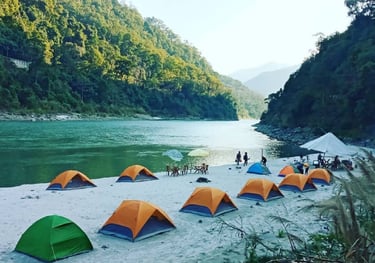
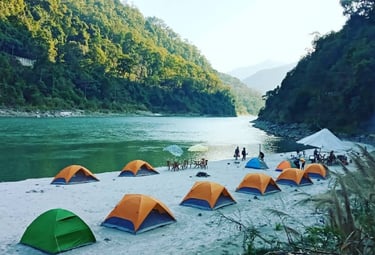
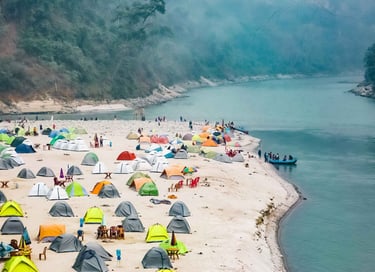
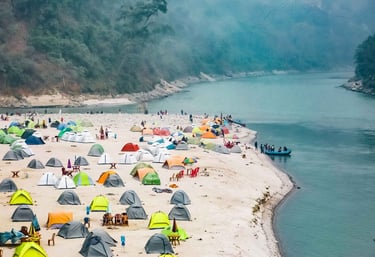
Triveni Camp is designed to offer travelers a close connection with nature without compromising on basic comfort and safety. The camps are typically set up along the riverbank, allowing guests to enjoy uninterrupted views of the flowing Rangit River and the surrounding hills.Accommodation is usually provided in well-maintained tents equipped with proper bedding, lighting, and attached or common washroom facilities depending on the camp category. The focus of the camp experience is not luxury in the conventional sense but comfort, cleanliness, and location.
Triveni Camp: Riverside Stay Experience
Triveni Camp is designed to offer travelers a close connection with nature without compromising on basic comfort and safety. The camps are typically set up along the riverbank, allowing guests to enjoy uninterrupted views of the flowing Rangit River and the surrounding hills.ccommodation is usually provided in well-maintained tents equipped with proper bedding, lighting, and attached or common washroom facilities depending on the camp category. The focus of the camp experience is not luxury in the conventional sense but comfort, cleanliness, and location.
Introduction to River Rafting in Triveni
River rafting in Triveni is primarily conducted on the Rangit River, with certain stretches extending towards the Teesta depending on water levels and seasonal conditions. Organized rafting activities in this region began in the late 1990s and early 2000s, as adventure tourism in Sikkim started gaining recognition.Over time, rafting in Triveni has become one of the most accessible adventure activities in the state, suitable for first-time rafters as well as those with prior experience. The presence of consistent water flow, moderate rapids, and trained local guides has contributed to its popularity.
Rafting Stretches and Distance
The most commonly used rafting stretch near Triveni is:
Triveni to Melli Stretch
Distance: Approximately 7 km to 14 km
Duration: 1.5 to 3 hours (including briefing)
Rapids Grade: II to III+
This stretch offers a balanced experience, with calm sections for practice and recovery interspersed with moderate rapids that provide excitement without excessive risk.
Other nearby stretches include
Melli to Rangpo (Teesta River): Around 16 km
Sikip to Melli (Rangit River): Around 12 km (higher difficulty, seasonal)
Progression of a Typical River Rafting Experience
1. Reporting and Orientation
Participants are required to report at the designated rafting base near Triveni. Upon arrival, they are introduced to certified river guides who conduct a detailed safety briefing. This includes instructions on paddling techniques, body positioning, river commands, and emergency procedures.
2. Equipment and Safety Gear
Each participant is provided with international-standard safety equipment, including:
Life jacket
Helmet
Paddle
Equipment checks are mandatory, and guides ensure proper fitting before entering the river.3. Practice Phase
3.Practice Phase
Rafting begins on calm water sections where participants can practice paddling and coordination. This phase is essential for building confidence, especially for beginners.
4. Rapids Navigation
As the raft progresses downstream, participants encounter a series of Grade II and Grade III rapids. These rapids vary in intensity and are navigated under the direct supervision of trained guides. Clear communication and teamwork are emphasized throughout the experience.
5. Calm Stretches and Scenic Sections
Between rapids, the river opens into calmer stretches where participants can relax, enjoy the scenery, and sometimes engage in controlled river swimming at designated safe zones.
6. Completion and Exit
Rafting concludes at a predetermined take-out point, usually near Melli. Participants change into dry clothes, after which transportation is arranged back to Triveni Camp or onward destinations.
Safety Standards and Regulations
Safety is a critical component of rafting operations in Triveni. Activities are conducted under regulated conditions, with strict adherence to safety protocols. Rafting is generally restricted during the peak monsoon season due to high water levels.
Key safety measures include:
Certified and experienced river guides
Mandatory safety gear
Pre-activity safety briefing
First-aid and rescue support on standby
Participants are typically required to be within a certain age and fitness range, and those with serious medical conditions are advised to consult operators beforehand.
Best Time to Visit Triveni Camp and Go Rafting
The ideal season for visiting Triveni Camp and enjoying river rafting is from October to May.
October to November: Clear weather, pleasant temperatures, and stable river conditions.
December to February: Cooler temperatures; rafting depends on water levels.
March to May: Warmer climate, excellent rafting conditions, and vibrant surroundings.
Rafting is generally suspended during the monsoon months (June to September) due to safety concerns.
Who Should Visit Triveni Camp?
Triveni Camp is suitable for a wide range of travelers, including:
Adventure seekers looking for safe river rafting
Families with older children
Group travelers and corporate outings
Nature lovers seeking riverside stays
Travelers combining Sikkim with Darjeeling or Kalimpong